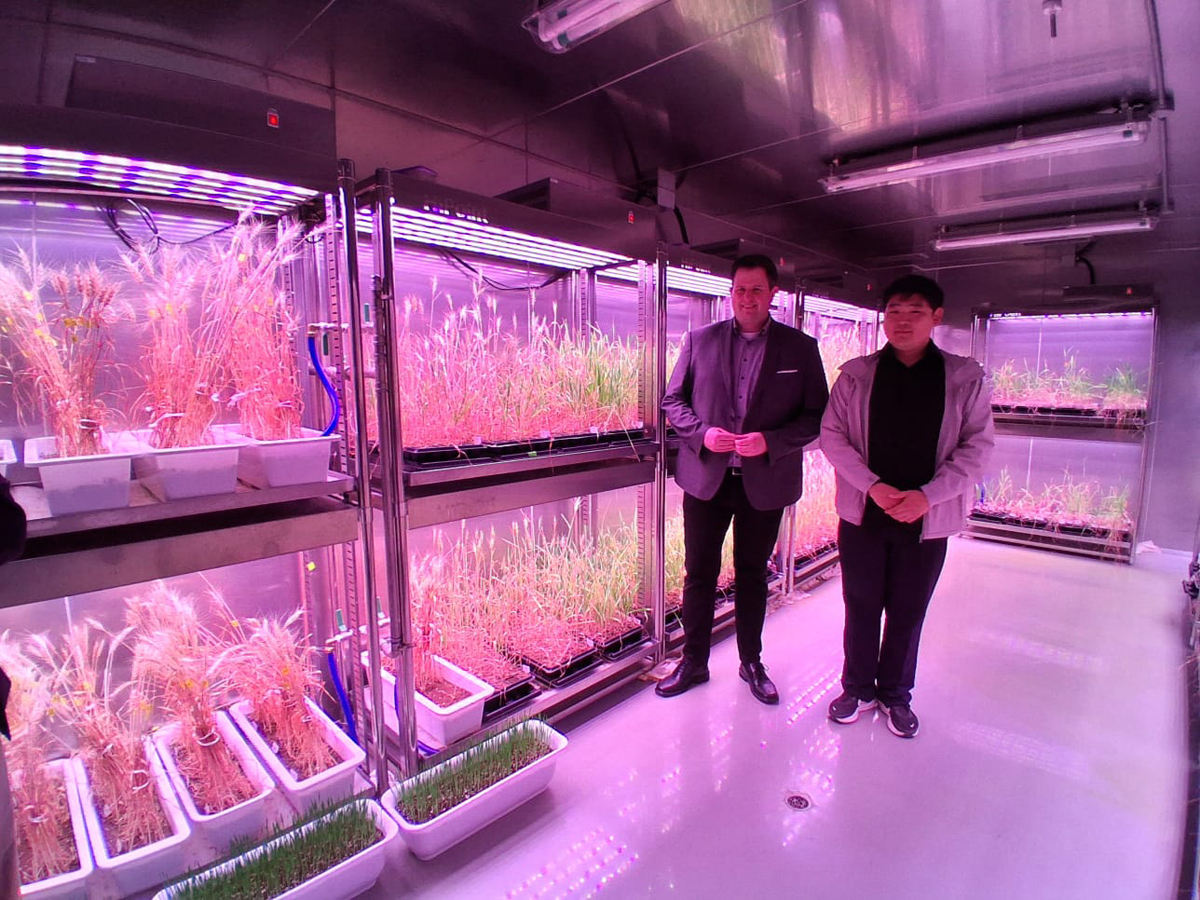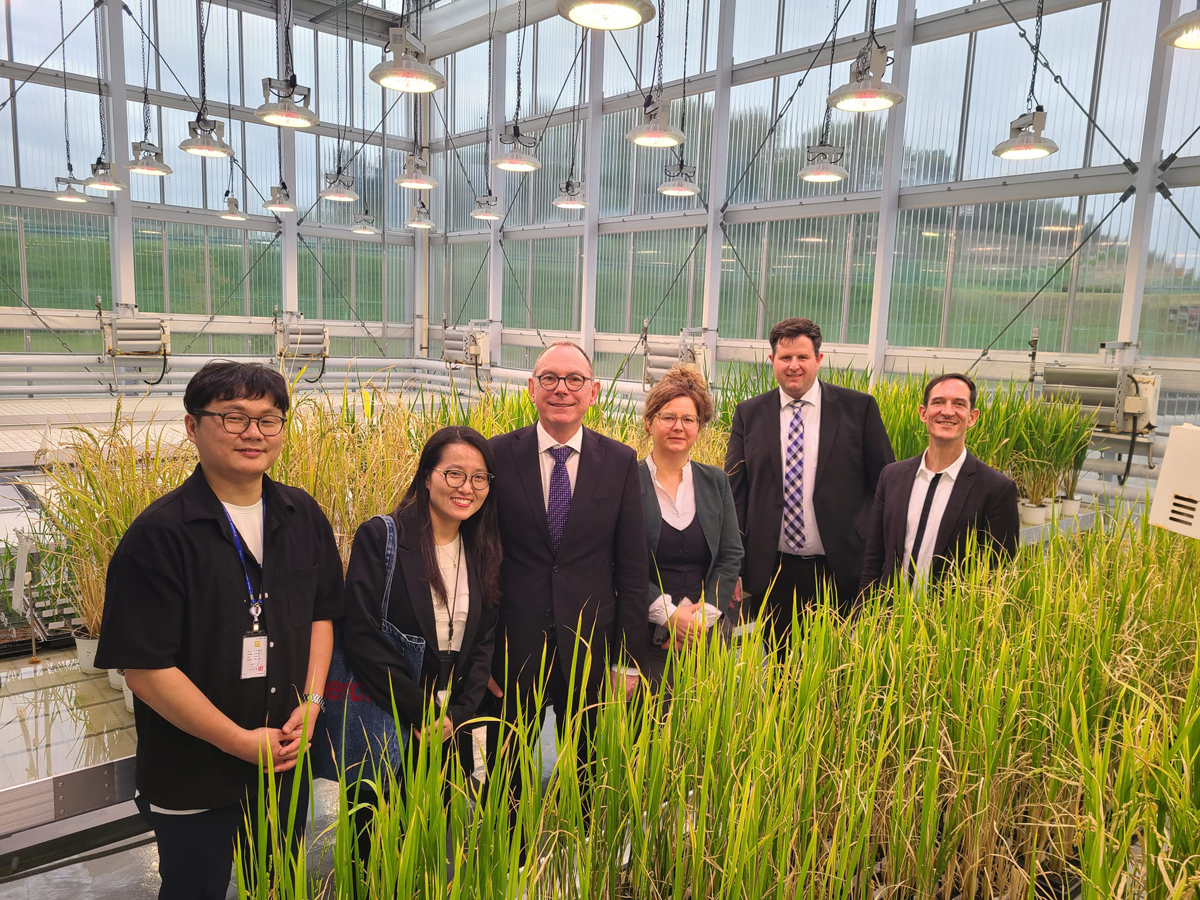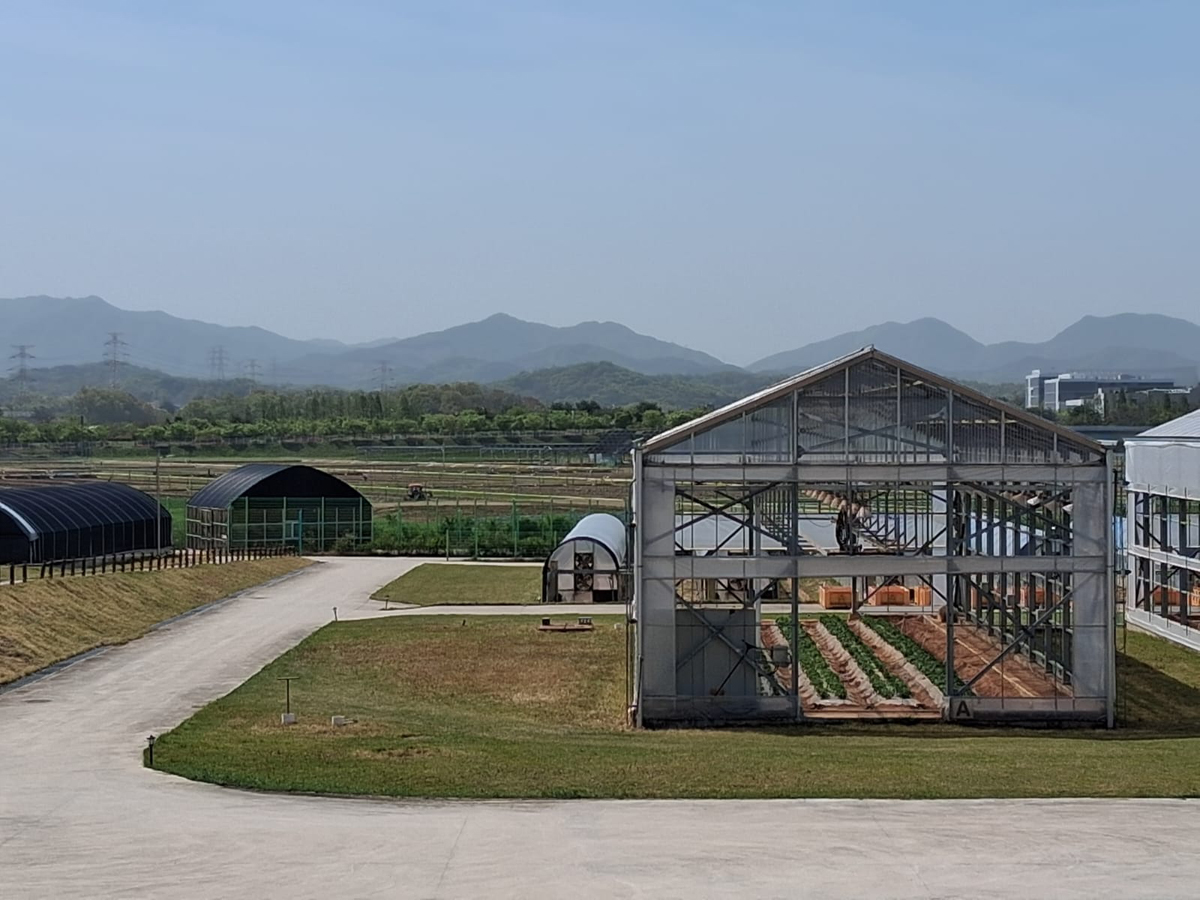
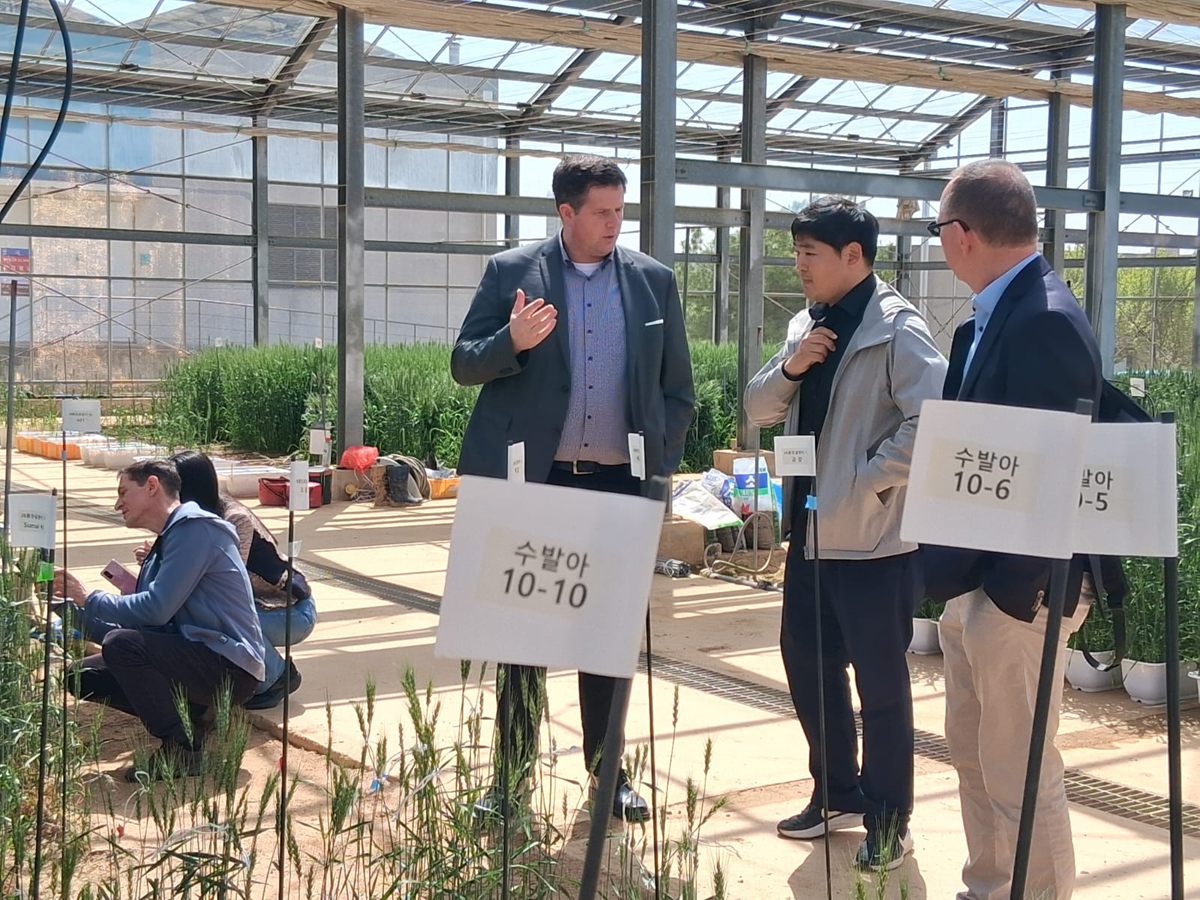
As part of a visit of a delegation of the Julius-Kühn-Institute (JKI) to South Korea from April 20th to 22nd, the members visited the National Institute for Crop and Food Science (NICS), a specialist institute operating under the umbrella of the state-run Rural Development Administration (RDA). NICS and its counterpart, the JKI-Institute for Resistance Research and Stress Tolerance (RS) have recently launched the three-year research project: “Exchange research technologies and methods of heat and drought stress tolerant wheat in response to climate warming and selection of genetic resources”. The head of JKI’s specialized institute, Prof. Dr Andreas Stahl, took advantage of his visit to South Korea to hold an initial face-to-face project meeting with his fellow researchers to discuss further details.
Due to climate change, such as global warming, wheat plants are increasingly suffering from heat damage. High temperatures during the grain-filling stage affect the grain-size and storage proteins of the grains, leading to yield losses and reduced quality.
“In order to ensure stable domestic wheat production in our two countries in the future, it is necessary to investigate the effects of temperature fluctuations during flowering and grain filling and to identify the genetic causes of heat stress tolerance,” says JKI’s breeding researcher Andreas Stahl. To this end at his institute Gwendolin Wehner’s research group intends to investigate not only yield components but also the up- or down-regulation of specific genes in response to defined stress events.